Process
My Process of Making
My process is anchored in direct, physical engagement—with clay, wood, and fire.
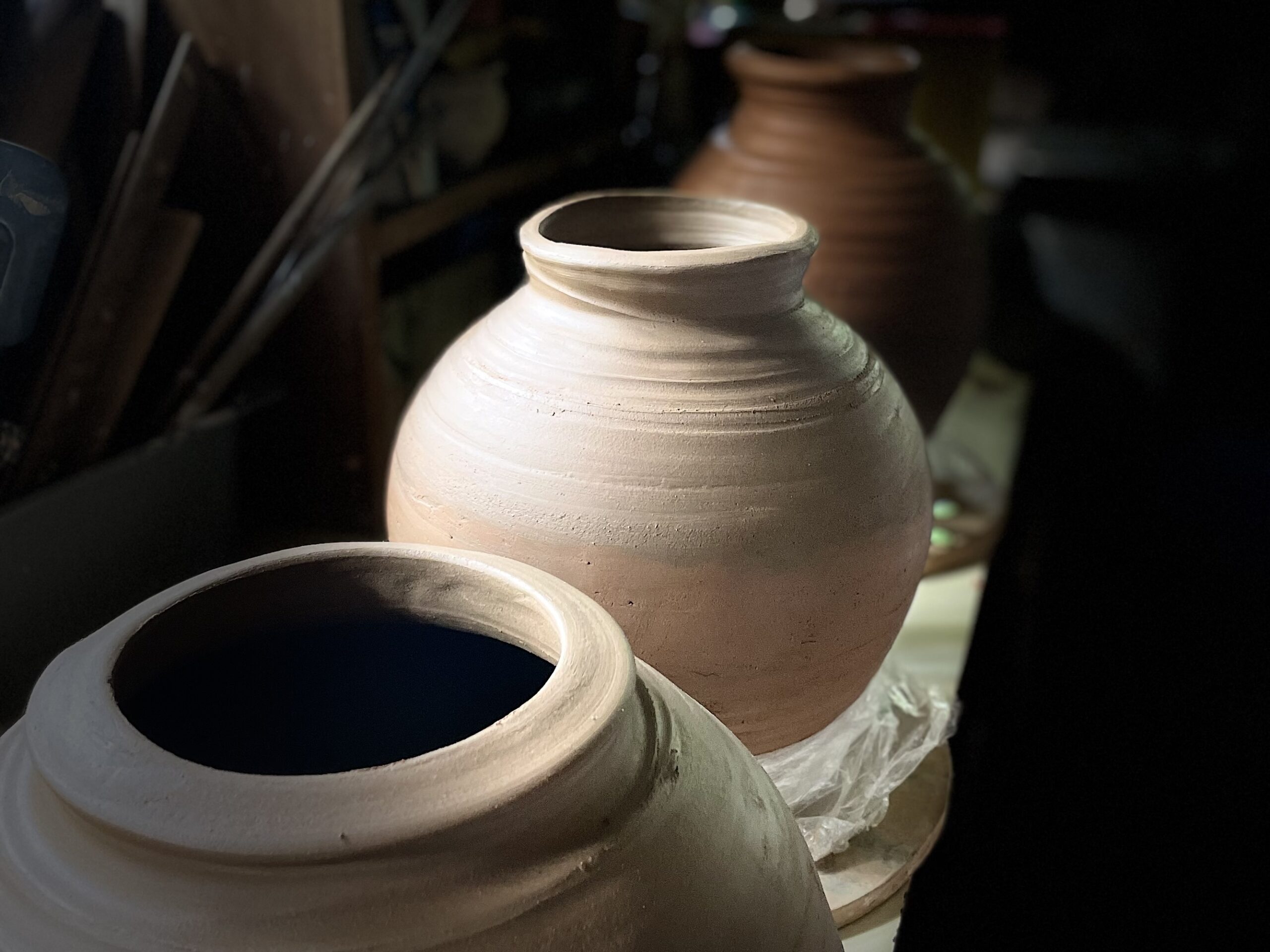
Developing a variety of clay bodies from local materials is the foundation of my practice. I dig up a high iron clay, literally, at the front gate of our property. This stoneware clay, was formed from decomposing granite laid down over the 300 million years ago, when Australia was part of the supercontinent, Gondwana. The Atherton Tablelands has a rich geological history, including more recent volcanism forming many of the rocks I use to create my glazes. Our Front-Gate clay and other local clays and rocks form the springboard for endless experimentation with colours and surface textures. I use the wheel as a tool. Throwing most forms, often throwing and then working off the wheel. I alter, add, subtract, and mark the surface, using my body and tools I find or make. Slips and glazes are applied in different stages, depending on the clay body. I like to work in small batches, repeating a form in various sizes, making slight variations and exploring the spaces between them.
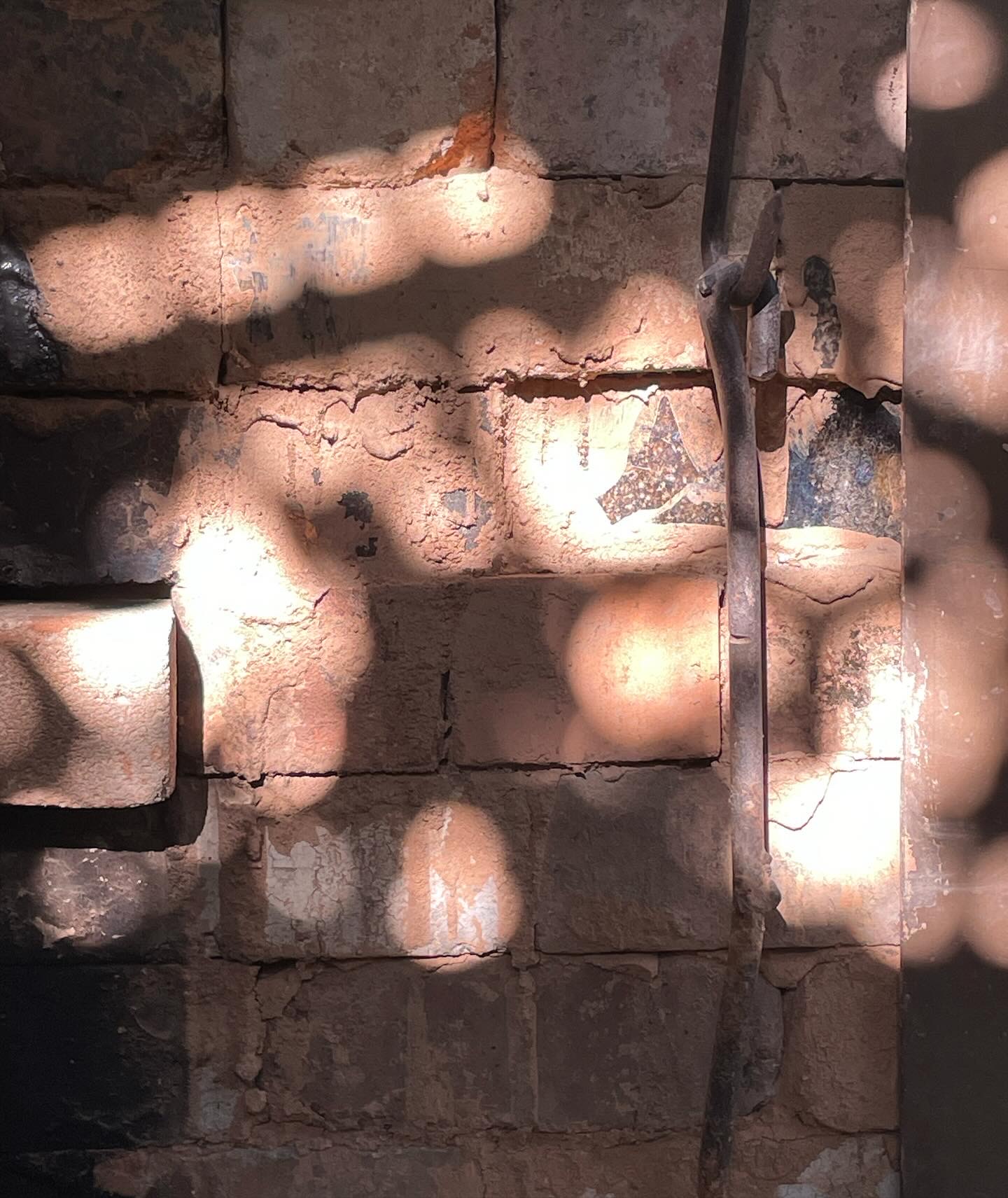
We built our Tiny Train kiln in 2022, based on Steve Harrison’s long-throated Bourry Box design. In 2025, I completed a year-long mentorship through Cohorts.Art with master potter Sandy Lockwood. Sandy’s guidance was pivotal in refining my wood-firing skills, understanding and adjusting the kiln design for desired effects, and supporting my early experimentation with salt glazing. I fire 4-5 times a year with each firing taking between 3-4 days, depending on the way I fire and the atmospheric effects I am seeking. All pots are raw fired, some decorated with slips and glazes, depending on the clay body, their position in the kiln and type of firing planned. The kiln is stoked very slowly and carefully at the start of a firing until reaching about 800C when I begin stoking on the hobs, with alternating periods of reduction and oxidation, climbing to 1280 – 1300C. I start to introduce salt at top temperature, holding the temperature for several hours. The salt volatilizes inside the chamber adding to the alchemy of the atmosphere, creating a thin, hard glaze which makes some surfaces very durable and suitable for tableware and others more suited to sculptural vessels.
Firing this way is a true collaboration with the flame, the wood, and the atmosphere and placement of pots inside the kiln. The kiln paints its own story. No two firings are alike, and no two pots come out the same. What emerges is a record of that entire process—of time, heat, touch, and material transformation.